
Integrating Design Thinking with Agile Methodologies: Synergy for Faster and More User-Centered Innovation

In today’s fast-paced and competitive market, businesses continuously seek methods to enhance innovation, streamline processes, and better meet customer needs. Design thinking and agile development are two prominent approaches that have gained traction in achieving these goals.

Both methodologies offer substantial benefits individually, but their integration can create a powerful synergy that accelerates innovation and ensures a more user-centered approach. This article explores how design thinking and agile methodologies complement each other and provide examples of their successful integration.

Understanding Design Thinking and Agile Methodologies

Design Thinking is a human-centered approach to innovation that emphasizes empathy, ideation, prototyping, and testing. The primary goal of design thinking is to understand the user’s needs and develop solutions that are both effective and user-friendly. The process involves five key stages:

  1. Empathize: Understand the user’s experiences and needs through observation and engagement.
  2. Define: Clearly articulate the problem based on insights gained during the empathize stage.
  3. Ideate: Generate a wide range of ideas and potential solutions.
  4. Prototype: Create tangible representations of the ideas to explore their feasibility.
  5. Test: Evaluate the prototypes with real users to gather feedback and refine the solutions

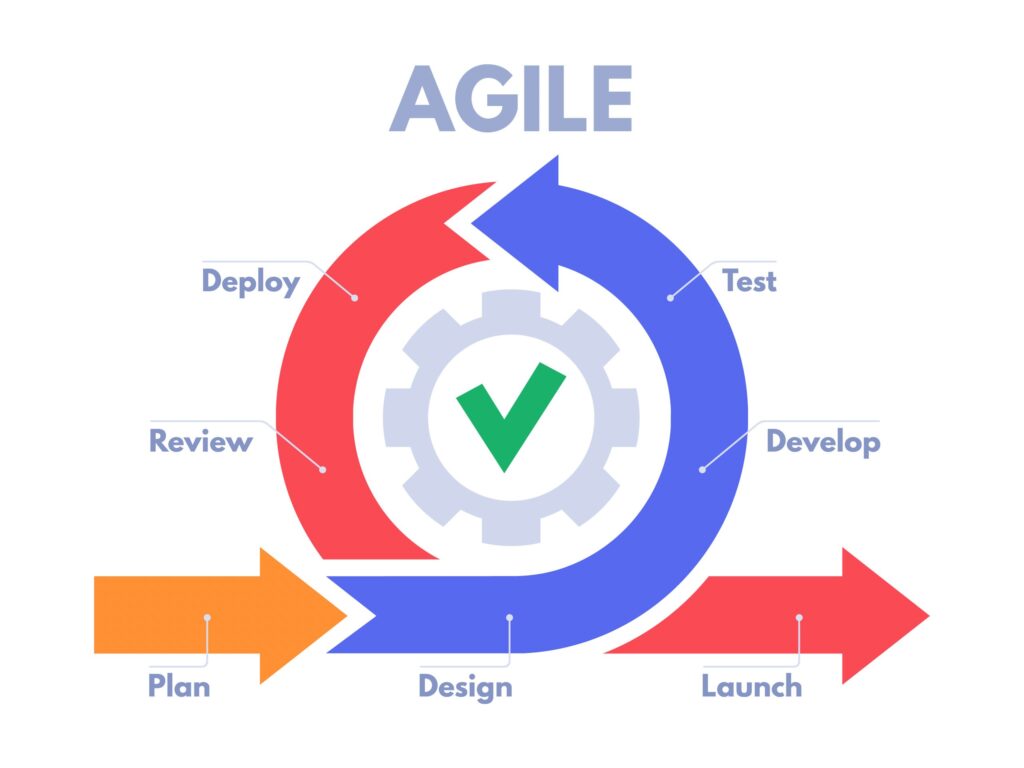
Agile Development is a methodology focused on iterative development, where requirements and solutions evolve through collaboration between cross-functional teams. Agile emphasizes flexibility, customer collaboration, and rapid delivery of functional product increments. Key principles of agile development include:

  • Iterative Progress: Development is broken down into small, manageable increments.
  • Customer Collaboration: Continuous engagement with the customer to ensure the product meets their needs.
  • Responding to Change: Flexibility to adapt to changing requirements at any stage of development.
  • Cross-Functional Teams: Collaboration among team members with diverse skills and expertise.
Agile Process
Agile Process

The Synergy Between Design Thinking and Agile

When integrated, design thinking and agile methodologies complement each other in several ways:

  1. User-Centricity: Design thinking’s focus on empathy ensures that the agile development process starts with a deep understanding of the user’s needs. This user-centric approach helps in defining clear, user-focused requirements that guide agile development.

  2. Rapid Prototyping and Testing: Design thinking’s emphasis on prototyping and testing aligns well with agile’s iterative development cycles. Prototypes developed during the design thinking phase can be tested and refined in agile sprints, allowing for continuous feedback and improvement.

  3. Flexibility and Adaptation: Both methodologies value flexibility. Design thinking’s iterative approach to problem-solving complements agile’s ability to adapt to changing requirements. This ensures that the final product remains relevant and meets the user’s evolving needs.

  4. Collaboration and Cross-Functional Teams: Design thinking encourages collaboration among diverse stakeholders, while agile thrives on cross-functional teams working together. This collaboration fosters a holistic approach to problem-solving and product development, leveraging the strengths and perspectives of all team members.

Integrating Design Thinking with Agile: A Step-by-Step Approach

To effectively integrate design thinking with agile methodologies, organizations can follow a structured approach:

  • Start with Empathy: Begin by conducting user research to understand the target audience’s needs, pain points, and behaviors. Use techniques such as interviews, surveys, and observation to gather insights.

  • Define the Problem: Synthesize the research findings to define a clear and concise problem statement. This helps in setting a focused direction for the development process.

  • Ideation Workshops: Conduct ideation sessions with cross-functional teams to brainstorm potential solutions. Encourage creative thinking and explore a wide range of ideas.

  • Create Prototypes: Develop low-fidelity prototypes of the most promising ideas. These prototypes should be simple representations that can be quickly tested and iterated upon.

  • Agile Sprints for Testing: Integrate the prototypes into agile sprints for testing with real users. Collect feedback and use it to refine the prototypes.

  • Iterate and Develop: Continue the cycle of prototyping, testing, and refining in successive agile sprints. Ensure continuous user feedback is incorporated into the development process.

  • Deliver Incremental Value: Focus on delivering functional increments of the product that provide value to the users. Use agile principles to prioritize features and ensure timely delivery.

Examples of Successful Integration

Airbnb is a prime example of how integrating design thinking with agile methodologies can lead to innovative solutions. The company started by empathizing with users to understand their experiences with traditional hotel bookings. Through ideation and prototyping, Airbnb developed a platform that provided a unique and personalized lodging experience. Agile development allowed them to iteratively refine the platform based on user feedback, leading to a product that resonated deeply with customers and disrupted the hospitality industry.

IBM’s Design Thinking framework incorporates agile practices to drive innovation in software development. By placing the user at the center of the design process, IBM teams create prototypes that address real user needs. Agile sprints are then used to develop and refine these prototypes, ensuring that the final product is both user-centric and high-quality. This integrated approach has helped IBM create impactful solutions across various domains, from healthcare to finance.
Spotify combines design thinking and agile methodologies to continuously improve its music streaming service. The company conducts extensive user research to understand listener preferences and pain points. Through rapid prototyping and iterative testing, Spotify develops features that enhance the user experience. Agile practices enable the team to release updates frequently, responding quickly to user feedback and market trends.

Conclusion

Integrating design thinking with agile methodologies creates a powerful synergy that drives faster and more user-centered innovation. By combining the user-centric approach of design thinking with the flexibility and iterative nature of agile development, organizations can develop products that truly meet user needs and adapt to changing requirements.

The success stories of companies like Airbnb, IBM, and Spotify demonstrate the effectiveness of this integrated approach. As businesses continue to seek ways to innovate and stay competitive, the integration of design thinking and agile methodologies offers a proven path to achieving these goals.

Summary

Integrating design thinking with agile methodologies creates a powerful synergy that accelerates innovation and enhances user-centricity. Design thinking’s focus on empathy, ideation, and prototyping complements agile development’s iterative, flexible approach, ensuring continuous user feedback and adaptation to changing requirements. This integration fosters collaboration among diverse teams, leading to holistic problem-solving and more relevant solutions. Successful examples from companies like Airbnb, IBM, and Spotify highlight how this combined approach leads to impactful, user-centered innovations. By embracing this synergy, organizations can develop products that better meet user needs and respond swiftly to market dynamics.

More Resources on Design Thinking

Jump to...